Scientific Machine Learning & Uncertainty Quantification
Learning and optimizing
complex systems
under uncertainty.
We are a research group at Georgia Tech. We build fast, scalable methods that integrate data with physical models, toward real-time digital twins.
Each curve is one plausible state of an unknown field. Click to place a sensor, or let the algorithm pick the most informative spot.
0 sensors100% uncertainty left
What we work on
On the computational side, a digital twin needs four things: a fast model, data to correct it, decisions to make, and the computing to run it. The physical side, installing sensors in the field and acting on the real system, is where we collaborate with others.
-
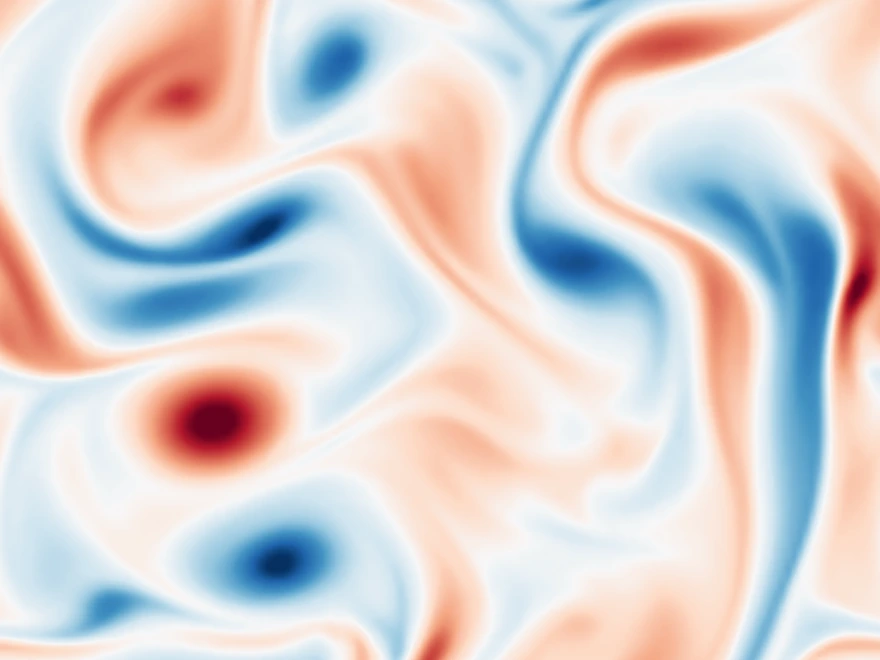
Model
Scientific machine learning
Fast surrogates of expensive physics, with error guarantees.
-
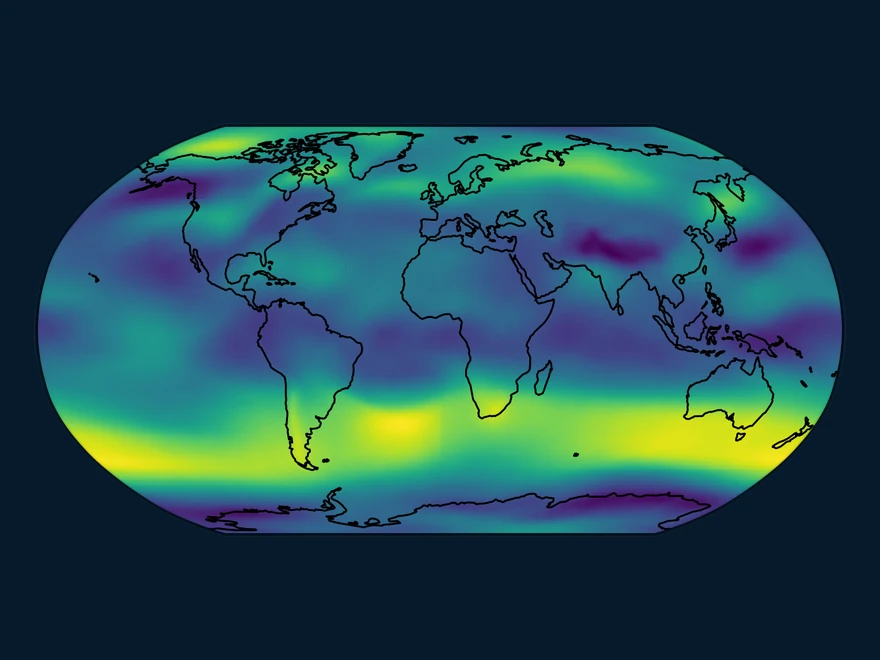
Update
Data assimilation & Bayesian inference
Keeping models in step with sparse, noisy data.
-
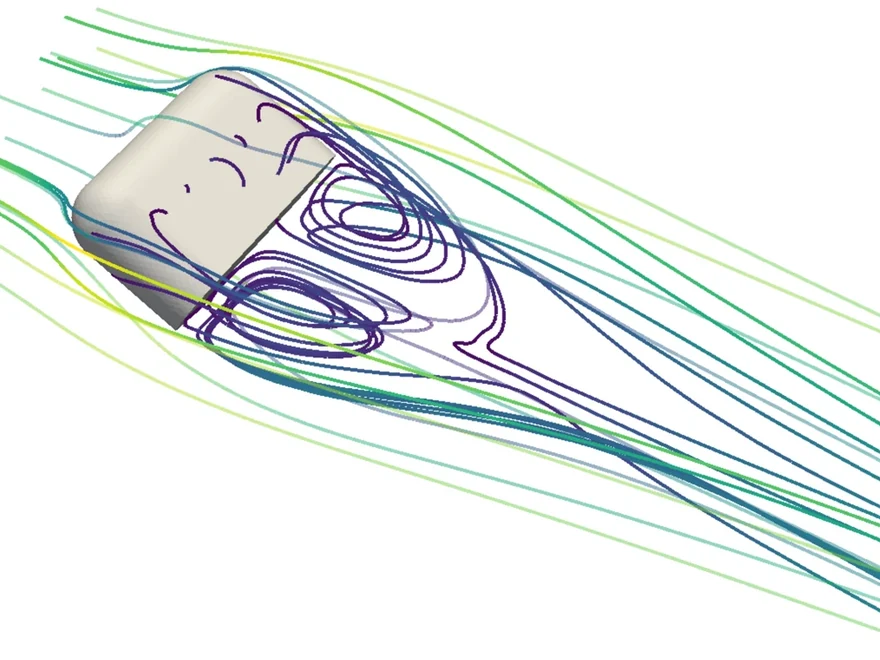
Decide
Optimization of control, design & experiments
What to measure and what to do, under uncertainty.
-
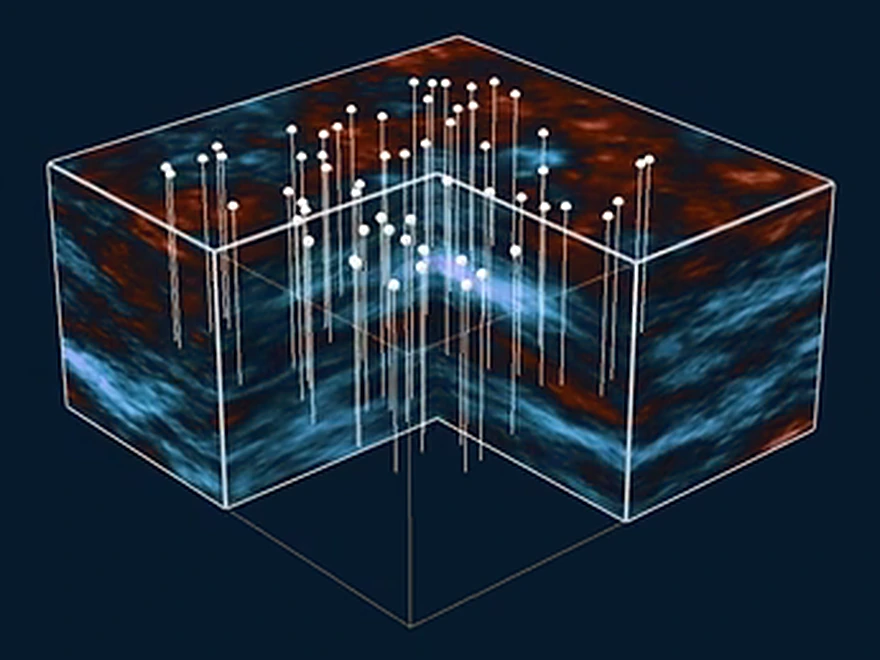
Scale
High-performance computing
GPU solvers such as GeoSWE and hIPPyMFEM: billions of unknowns on one node, a trillion cells on Frontier.
Featured project
Digital twins for floods, from a county to a continent
We are building the components of AI-driven digital twins for real-time flood prediction.
Latest news
October 6, 2026
Our open-source library GeoSWE (Geophysical Shallow-Water Engine) is released: a GPU finite-volume solver for the 2D shallow-water equations, for flood modeling from a 3 m coastal county to the conterminous United States on one multi-GPU node. See the documentation.
October 2, 2026
Our paper LD-EnFF: Latent-Dynamics Ensemble Flow Filtering for Data Assimilation with Sparse Observations is submitted, with Ziyu Tian, Kaichen Shen, Wenbo Hao, Phillip Si, and Wei Zhu.
September 30, 2026
Our paper C-STRIDE: An Observation-Driven AI Digital Twin for Predicting Basin-Wide Flood Fields from Sparse Stream-Gauge Histories is submitted. Congratulations Yanjie, Phillip, and Yuan!
Recent papers
- LEVDA: Latent ensemble variational data assimilation via differentiable dynamics
- Gaussian mixture Taylor approximations of risk measures constrained by PDEs with Gaussian random field inputs
- LD-EnFF: Latent-dynamics ensemble flow filtering for data assimilation with sparse observations
- C-STRIDE: An observation-driven AI digital twin for predicting basin-wide flood fields from sparse stream-gauge histories
Prospective students
I am looking for highly motivated and strong students at computational math and machine learning! If you are interested, please send me an email with your CV, transcripts, and briefly discuss our work you are interested in and why you are a good fit.